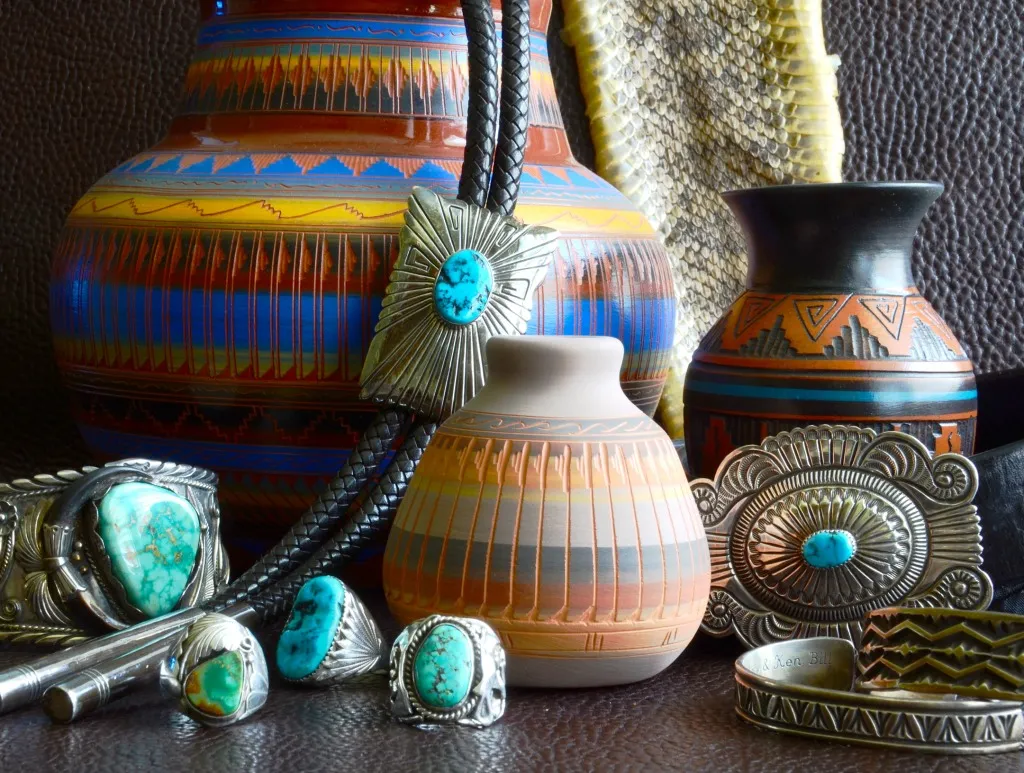
Have you ever held something so beautiful that it seemed to tell a story all on its own? That's exactly how I felt the first time I held a piece of authentic Native American crafts. My hands trembled a little as I touched the tiny glass beads on a wristband made by a Navajo artist in Arizona.
I was thousands of miles from home, but in that moment, I felt connected to something ancient and powerful. Native American crafts aren't just pretty objects you hang on a wall. They are living stories made with human hands, and today, I want to share what I have learned about them with you.
What Exactly Are Native American Crafts?
I am referring to the beautiful and useful products of the Indigenous peoples of North America when I discuss Native American crafts. These may be clay pots and woven bags or silver ornaments and headdresses made of feathers. The special thing about these items is that they are normally prepared in a similar manner as the way they were prepared hundreds of years ago.
According to my friend Michael Johnson, who is the author of a huge book entitled Arts & Crafts of the Native American Tribes, these objects are a combination of art, religion and daily use altogether. You cannot distinguish the meaning and the beauty. That is what I find so amazing.
Why Native American Crafts Matter So Much
Each item of Native American works has its story. Think about a simple basket. It may seem like something you can pick up at a shop although the Native artist baskets can tell you more like what plants grew in the area around their village, what time of year is significant in picking and even what stories the weaver heard as a child.
The first art form as described in the library book I found is basketry. Prior to the writing words, there were baskets before people had written words.
You may also read :- Crafting Made Easy: Best Paints for Wood Craft Projects
Crafts Connect People to the Earth
The materials used by Native American artists are taken directly off the earth. They collect the clay along the river banks. They gather shells along the beaches. They get the wool of mount goats. One of the projects that I came across the other day floored me.
The Sealaska Heritage Institute is educating individuals on how to make an entirely mountain goat wool robe the first time this has happened since the 1800s. Is it possible to wait nearly two centuries to see a form of art revived?
One day, when Master weaver Shelly Laws was examining ancient robes in museums she realized that there was something interesting about them. I have got it pretty fine, I have said, because I do my own spinning. But doggone it, it just does not look the same.
And I have come to understand that it is the materials, since they were mountain goat" . This quote makes me reflect on the fact that the Native American crafts are reliant on nature. Change the materials, change the art.
Crafts Keep Languages and Traditions Alive
This is one of the things I had not expected to find out. You also tend to learn the words in the Native languages when you create Native American crafts. The UC Davis lesson plan educates little children with lessons about Karuk, Hupa necklaces, and Yurok. The children are told the names of shells such as dentalium and abalone in the tribal languages. Thus the crafts act as a gateway to talking and knowing words that would have been forgotten.
Different Kinds of Native American Crafts You Should Know
I will take you on a tour of some of my favorite Native American arts. So many of them, but I will just take the ones that I could not help but drop my jaw when I first saw them.
Beadwork and Quillwork That Shine
Oh my goodness, the beadwork! I cannot sew a button as straight, and the Native artists make entire pictures out of small beads not larger than a pin-point. Prior to the arrival of glass beads in Europe, porcupine quills were used. Yes, porcupine quills! They would squash them, color them with plant dyes and stitch them on clothes in pretty designs.
Nowadays, incredible Native American beads jewelry is sold at the markets and galleries. The Indian Arts and Crafts Board even has a list of Native businesses that are truly theirs in case you are paying money to buy the real thing.
Basketry Magic
Baskets may sound easy to understand but just wait and then take one and have a peep. There are three primary methods used by Native weavers, which include; plaiting, twining, and coiling. they have baskets that are so tightly woven that the water can be inserted therein.
There are others which are so intricate that you can study them hours and hours and discover new things. California tribes are particularly known to make baskets. Looking at a well crafted basket, I imagine the hands of the patient who collected each plant and twisted each thread.
Pottery That Holds History
Another wonderful aspect of the Native American crafts is pottery. Pueblo artists in the Southwest create pots with an appearance of being glowing internally. They brush them with geometric designs with the help of brushes which are created out of the yucca plants.
A New Mexico student called Alana has recently been involved in the restoration of hundreds of tiny Pueblos clay figures on an exhibit in a museum. She was told that making such figures entails getting to know more about the land that the clay is based on. She said, Native American communities are not their individuals, but the land they live on and what they make of what it provides them. That sentence gave me chills.
Textiles and Weaving Wonders
Have you ever been in a Navajo blanket? They are pieces of art which you can wear around your neck. One of the most complicated crafts of the Natives is weaving. The Chilkat robes of the Northwest Coast follow a method which is known all around the world to be hard. The weavers use cedar bark to spin the mountain goat wool to make curvy robes known as ovoids. This is something that it takes years to perfect.
Woodwork and Carving
The most well-known wooden Native American crafts are most likely totem poles. But there are also artists who carve masks, bowls, spoons and figures. A case in point is the horn spoon project I described above, which is currently training twelve Alaska Native artists to make spoons out of horns of mountain goats.
Such spoons are not meant to be used on a daily basis. They are of exclusive events in which people dine together and reminisce their ancestors. Steve Brown is a historian who claimed that these spoons were previously possessed by each family and were used on big feasts.
How to Respectfully Appreciate Native American Crafts
It is so significant, and I would like to elaborate upon it. We have to respect the Native American crafts when we admire them. The instructors at UC Davis developed an excellent guide regarding this. According to them, the cultural appreciation implies the respectful and understanding learning about another culture.
Cultural appropriation occurs when individuals steal elements of a culture without knowing their associations and apply them to their own benefit.
How then do we value crafts in the right manner? We get to know about their backgrounds. We purchase authentic Native artists. We do not attempt to imitate religious objects as Halloween costumes or party decorations. The educators indicate that one should tell children that these necklaces are unique and precious, and they are usually made with a lot of attention and given out in families.
Buy Authentic, Not Fake
This is one of the lessons I have learned. All that is being sold as Native American is not real. Indian Arts and Crafts Act is an act that criminalizes any kind of pretending that something is of Native origin, when it is not.
The government goes so far as to publish a Source Directory of nearly 200 legitimate Native-owned businesses . There are moccasins, drums, paintings, everything created by the actual Native artists.
Fun Ways to Explore Native American Crafts with Kids
In case you want to show children some Native American crafts, you could do it in a respectful manner. The UC Davis lesson plan presents one of my most preferred ideas. Children view a video of one of the real Native artists named Maggie Peters, who tells them why necklaces are significant to her people.
Then they get to know patterns with pictures of shells and beads. Lastly, they paint their design of necklaces on paper. Dare they not make necklaces to put on. They are getting to know about patterns and culture without imitating sacred objects.
Paper Bag Puppets Done Right
The other crafting activity is paper bag puppets, though there is one twist to it. The guidelines encourage the teacher to match the craft and age-related books and official tribal material. Children can also get to know that other tribes had varying styles of clothing. Plains Indians were recognized to be braiders and beadworkers, and Pueblos tribes were potters and geometrical patterners. It is not crafting, but learning.
What Not to Do
Please, please, do not dress kids up costumes with fake feathers headdresses. This angers a number of Native people since real headdresses are acquired through heroic deeds and they are highly sacral. According to the UC Davis guide, it would be improper to reproduce, duplicate or sell these sacred objects, without tribal counsel or consent. We are able to appreciate headdresses in museums without having copies.
FAQs: Native American Crafts
How can Native American crafts be compared to regular crafts?
Native American crafts are created according to certain cultural traditions and are passed on through generations by Native families and communities. They are usually made of local materials and techniques, and they have cultural connotations that transcend ornamentation.
Is it permissible that my child create Native American crafts to make a school project?
Yes, if you do it respectfully. Learn about patterns, materials and cultural meanings instead of imitating religious relics. When possible use lessons developed by Native educators.
What do I know to know whether a craft is Native American or not?
Find artist signatures, enquire about the tribal belonging of the artist and purchase through reliable sources such as tribal galleries or the Indian Arts and Crafts Board directory.
What is so costly about some Native American crafts?
The reason is that they consume many hours to prepare with the year-learned skills. The materials used such as the mountain goat wool or natural dyes are difficult to collect. You are not buying factory production, you are buying art.
Is it possible to have a visit to locations where Native artists are working?
Yes! There are artist demonstrations in many tribal cultural centers. Watch artists work also at powwows and Native art markets. Only to be reminded to seek permission when taking of photos.
What is the oldest Native American craft?
Basketry is believed to be one of the earliest art. Pottery was uncommon long before baskets became necessary to collect, store, and cook food.
Are there Indian crafts, carrying a spiritual significance?
Many do. The use of religious items such as masks, rattles, and specific regalia in religious activities is treated with a lot of respect.
My Final Thoughts on This Beautiful Tradition
The beginning of this adventure is that I had an idea that I would get to know pretty things. However, I learned that Native American crafts are actually concerned with people. They are of grandmothers educating grandchildren. They involve respecting of animals by hunters who provide them with materials. They have to do with artists preserving languages, bead by bead.
In speaking of the project involving the mountain goat robe, Rosita Worl, president of the Sealaska Heritage Institute said something beautiful: Our people have a relationship to jánwu that will survive in the hunters, weavers and carvers who will take part in this project.
I believe our fore fathers would be pleased to learn we are furthering this dying knowledge" That is what native American crafts are to me today. They are gateways between the old and new generations. The bridge is stronger each time a person is taught to weave or carve or bead.
Have you ever purchased or observed a special object of Native American crafts? I would be interested to know about it in the comments below.