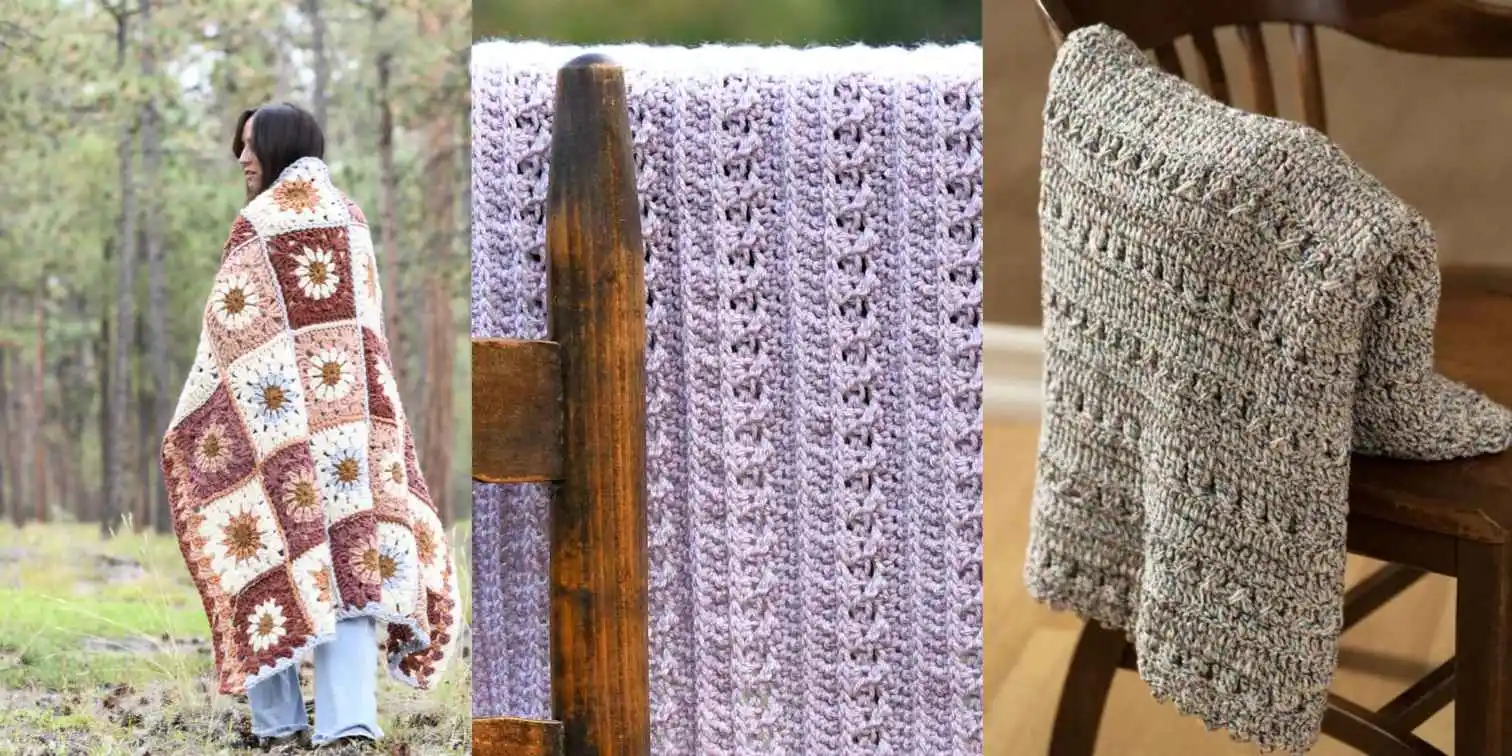
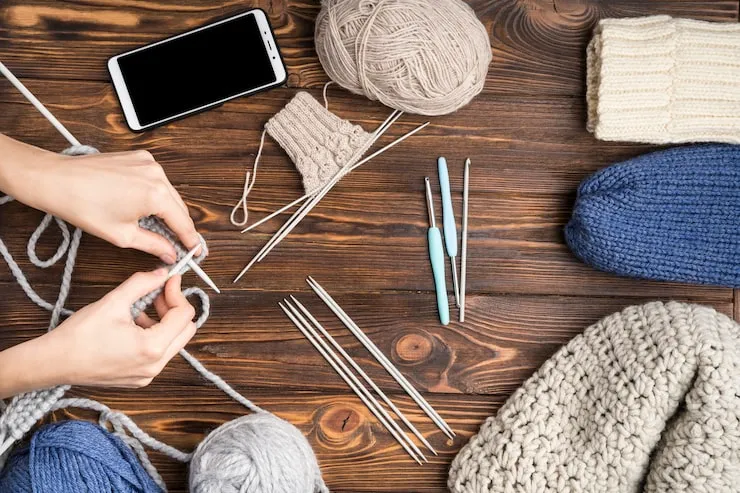
Have you ever wondered how something as comfortable as a sweater or as a cute stuffed animal came to be? Probably, it was knitted or crocheted. These are two wonderful methods of making some useful and beautiful out of a plain strand of yarn. Although they are different they are cousins of the yarn craft family.
This instruction will cover the key Types of knitting crochet and make you know what is special about each of them. Imagine that you have a building material which is yarn. Knitting involves the use of two sharp needles and interweaving of loops.
Crochet has a hook with a small opening on the end of it to draw the yarn through other hoops. They are both great pastimes that open the doors to creativity. Let's dive into the details!
You may also read :- Free Knitting Patterns For Babies: Knitting for Your Baby
Getting to Know the Basics: Yarn Craft Tools
We will discuss the various types but first we will examine the rudimentary tools you require.
In the case with knitting, you require knitting needles. They are made in metallic, wood, and plastic sizes and materials. The amount of the needle determines the stitches.
In the case with crochet, crochet hooks are required. Hooks are available in numerous sizes just like needles. Hook size will assist in the regulation of the tightness or looseness of your project.
Of course, you also need yarn! Yarn is available in all colors of the world. It may be dense, light, light, or hard. The most important part is the selection of the ideal yarn to use in your project.
Understanding the Different Types of Knitting and Crochet
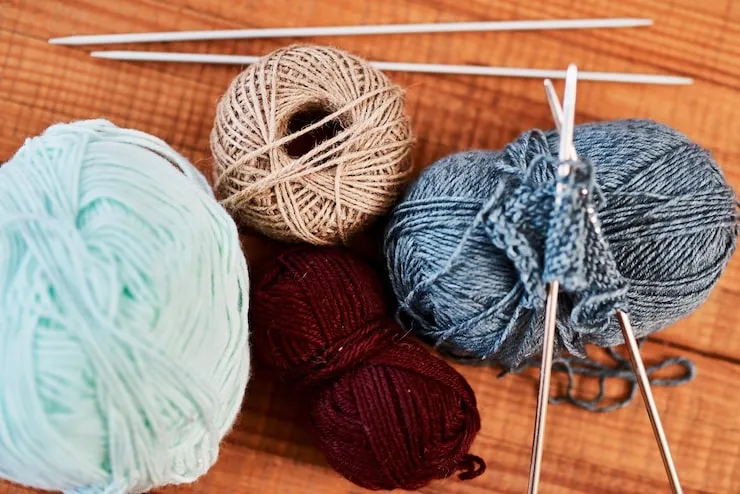
Most individuals use the query types of knitting crochet as they desire to know. One should understand that there is a difference between knitting and crochet. Each of them possesses its styles and approaches. Knowing them provides you with increased strengths to make everything that you imagine.
Primary Styles in the Art of Knitting
There are two main ways in which knitting is done. Both options are different and suitable to various projects.
English Knitting vs. Continental Knitting: Holding the Yarn
The largest variation in knitting will be the manner in which you hold the working yarn.
- English Knitting (Throwing): The right hand rule is used in this style where the yarn is held with the right hand. The stitching is done by wrapping the yarn round the right needle. This is a relatively simple technique to learn by many beginners.
- Continental Knitting (Picking): This method is one in which the left hand holds the yarn. The right needle is used to pick the yarn through the stitch. This is a style that becomes quicker as soon as you master it and is popular in Europe.
In my practice as a teacher of beginners, I usually ask to do both! One may be instinctively better than the other. No bad option- just the most comfortable one to your hands.
Popular Types of Knitting Techniques
And now we shall discuss individual knitting techniques. They are characterized by the manner in which you use your needles and the way you lay you stitches.
Flat Knitting with Straight Needles
It is the stereotypic image of knitting. You use two straight needles. You weave back and forth in a row. Upon completing a row, you rotate your work around and continue with another one. It is ideal in the creation of such things as scarfs, dish cloths and blanket squares.
Circular Knitting in the Round
This is a game-changer! The special type of needles is a pair of circular knitting needles joined together with a flexible cable. A set of four or five (DPNs) needles can also be used. You do not turn your work, but you knit in an unending spiral. Such is the key to the seamless hat, sock, mitten, and sweater tube!
Circular knitting is also a state of mind; in this case, to which a single knitting teacher known as Clara Parkes once remarked: Tube knitting is not the only type of circular knitting but an entire philosophy that leaves the design possibilities infinite.
Loom Knitting for Easy Stitches
It is a splendid needle-free beginning! You are playing knitting loom that is a plastic or a wooden frame with pegs. The yarn is wound around the pegs and a special tool is used to pull the loops. It is easier on the hands and forms beautiful and even stitches very fast. It is most suitable to make thick hats and blankets.
Exploring the Varied Types of Crochet Methods
Crochet is so much varied. It can be knitted much more quickly and can form more sculptural forms. This kind of crochet is normally determined by what section of the stitch you make an opening in.
Basic Crochet into Stitch Loops
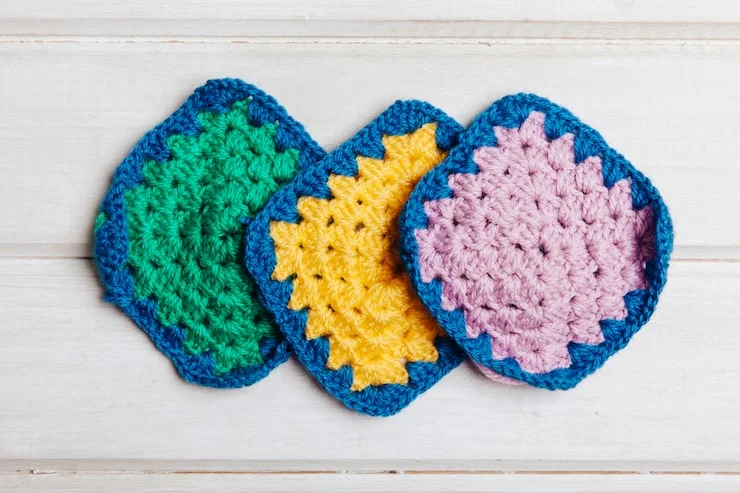
This is the common way of instruction in all books on beginners. You put your hook between the two top loops of the previous row stitch. It forms a good traditional cloth with explicit v-shaped stitches. The majority of granny square and plain blankets are constructed in such a manner.
Front Loop and Back Loop Crochet
It is one of the tricks to add a texture without knowing how to make another stitch!
- Front Loop Only (FLO): You will only put you hook under the loop which is nearest to you. This gives the effect of a stretchy rib.
- Back Loop Only (BLO): You will only loop your hook under the loop that is more distant to you. This forms a very nice, ridged line which is excellent at basketweave patterns.
I enjoy this method of creating an illusion of a more sophisticated and interesting project with virtually no additional effort.
Specialized Crochet Stitch Patterns
Outside where you hang your hook there are entire worlds of crochet designs.
- Tunisian Crochet (Afghan Stitch): It is a combination of knitting and crochet! You have a very long hook having a stopper. In one pass, you get packs of loops on the hook and in the second pass get them off. It forms a thick, cozy nice fabric that can be used as winter afghans and bags.
- Filet Crochet: This is a method of making exquisite lacy images by use of only chain stitches and double crochets. It’s like drawing with yarn! It is normally used to make table clothes and curtains.
- Amigurumi: This refers to the Japanese craft of crocheting little, stuffed animals. It is made by single crochet on magic rings and spiral techniques in order to make cute 3D figures. This style is the one that you would prefer to make a cute octopus or a smiling cupcake.
Choosing Your Project: What to Make?
Now that you know the sorts of sewing and sew styles, what ought to you make? Here’s a straightforward guide:
Start Straightforward: Start with a little level extend. Attempt a weaved scarf utilizing straight needles or a stitched dishcloth. This lets you hone the fundamental motions.
- Move to Caps: A cap is a extraordinary to begin with extend "in the circular." Attempt circular sewing or crocheting in a spiral.
- Make a Cover: This is a long-term, unwinding extend. You can hone diverse sew fastens or simple sew designs one square at a time.
- Create a Toy: Plunge into the fun world of amigurumi stitch. It’s fulfilling to see a small animal come to life from your hook!
Picking Up Your Needles or Hoo
The travel into the sorts of sewing sew is an enterprise. You have learned around level weaving, circular sewing, fundamental sew, and forte styles like Tunisian and amigurumi. Each strategy opens a modern entryway to creativity.
Remember, there are no strict rules. The best way to learn is to snatch a few reasonable yarn and a needle or snare. Begin with a basic instructional exercise for a apprentice weaving venture or an simple sew design. Do not stress around being culminate. Fair appreciate the feel of the yarn and the cadence of the stitches.
Before you know it, you’ll be making endowments, cozy things for your domestic, and treasures filled with cherish. The world of yarn creates is inviting, inviting, and perpetually fulfilling. Welcome to the community
FAQs: Your Questions Answered
Q: Is weaving or stitch simpler for a add up to beginner?
A: This is the most common address! Sew is regularly less demanding to begin since you as it were oversee one live circle at a time. If you drop a fasten in sew, it’s less demanding to settle. Weaving has a less complex set of essential fastens, but can feel trickier at to begin with. The best reply is to attempt both and see which one feels more common to your hands.
Q: Can you blend weaving and stitch in one project?
A: Completely! This is a superb imaginative procedure. Numerous knitters include a sewn border to a weaved cover for a flawless wrap up. You can moreover stitch enriching blooms to sew onto a sewn hat.
Q: Which make employments more yarn?
A: By and large, stitch texture employments around 30% more yarn than a comparative sewn texture since the fastens are thicker and denser. This is great to know when buying yarn for a expansive project.
Q: What is the most imperative thing for a fledgling to remember?
A: Be understanding and kind to yourself. Your to begin with few lines might see uneven—that’s totally ordinary! Each master was once a fledgling with unstable fastens. The objective is to appreciate the handle of making with your hands.