If you take probiotics, your digestion gets smoother, your immune system works better, and you might even feel happier. Probiotics are live bacteria that fix the balance in your gut. When your gut is balanced, you bloat less, get sick less often, and absorb more vitamins from your food. Here is exactly how they work and how to choose the right one.
I remember sitting in my doctor's office three years ago. I had just finished a round of strong antibiotics for a sinus infection. My sinuses felt great. My stomach? A disaster. The cramping started every afternoon. Food that never bothered me suddenly turned into a problem.
My doctor looked at me and said something simple: "You killed the bad bugs, but you also killed the good ones. You need to rebuild your army." That was my first real introduction to probiotics. Since then, I have spent hundreds of hours reading studies, talking to dietitians, and testing different strains on myself. Here is what I learned.
What Probiotics Actually Do Inside You
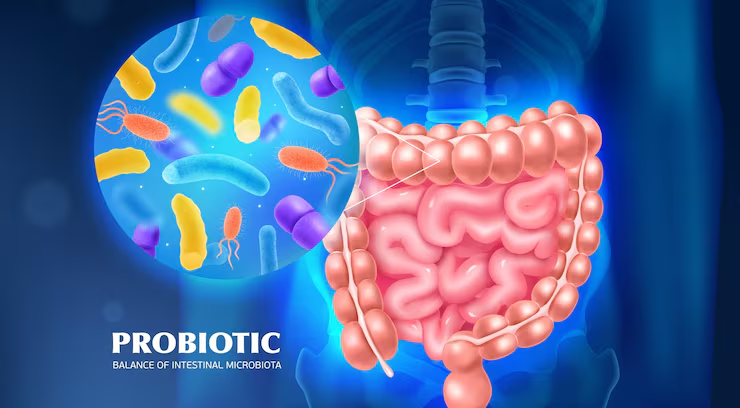
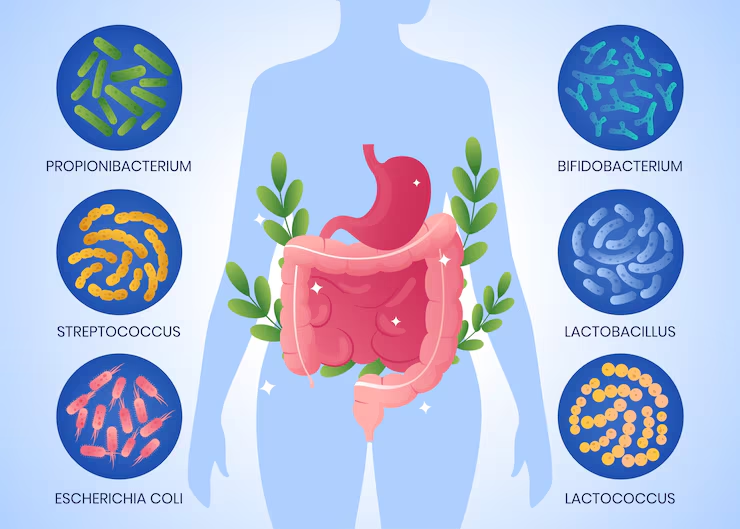
Let me paint a picture for you. Your gut is a crowded city. There are good citizens (beneficial bacteria) and criminals (harmful bacteria). When the criminals take over, things get chaotic. You get bloating, irregular bathroom trips, and low energy. Probiotics are the police force. They move in, restore order, and kick the criminals out.
They do this in three ways:
- They produce acid. This makes your gut too acidic for bad bacteria to live .
- They take up space. Bad bacteria cannot settle down if the good guys already live there .
- They talk to your immune system. Probiotics send signals that say, Hey, we are the good guys. Leave us alone.
You may also read : Mri Schedule With My Care Mountain View Health
The Top 10 Benefits of Probiotics (Backed by Science)
I am not here to sell you magic pills. I am here to tell you what the research actually shows.
1. They save your gut after antibiotics
Antibiotics are nuclear war for your bacteria. They wipe out everything. Taking probiotics during and after antibiotics cuts your risk of diarrhea by 42% . I learned this the hard way.
2. They deflate bloating
That tight, pregnant-looking belly after dinner? Specific strains like Lactobacillus plantarum reduce the gas production that causes that puffiness .
3. They make you regular
Whether you run to the bathroom too much or not enough, probiotics help. They regulate the speed of your digestive tract .
4. They boost your cold defense
About 70% of your immune system lives in your gut . When your gut bacteria are happy, they train your immune cells to fight actual threats instead of attacking pollen or dust.
5. They protect vaginal health
For the women reading this, certain strains create a protective barrier. They maintain the acidic environment that keeps yeast and bad bacteria from overgrowing .
6. They help you absorb minerals
Probiotics break down something called phytates in food. Phytates block mineral absorption. By breaking them down, probiotics help you get more calcium and magnesium from your meals .
7. They tighten your gut lining
Leaky gut is real. It happens when the walls of your intestines get holes. Probiotics help seal those holes so toxins stay in the gut where they belong .
8. They influence your mood
Your gut and brain are connected by a highway called the vagus nerve. Your gut produces about 90% of your serotonin . When your gut is happy, your brain gets the memo.
9. They help with dairy
If milk makes you feel weird, some probiotic strains help break down the lactose. You might tolerate yogurt better than a glass of milk for this reason .
10. They support your heart
Certain probiotics break down cholesterol in the gut before it enters your bloodstream . The effect is modest, but every little bit helps.
Signs Probiotics Are Working
My husband started taking probiotics two months ago. He kept asking me, "How do I know if this is doing anything?"
Here is what I told him to look for.
You will notice these signs first:
- Less noise. Your stomach stops gurgling loudly during meetings .
- Flatter stomach. That bloated feeling after lunch fades away .
- Predictable bathroom trips. You know what time things will happen, and it is not an emergency .
Within a few weeks, you might notice:
- Better sleep. A calm gut helps your nervous system relax .
- Clearer skin. Acne and eczema sometimes improve when gut inflammation drops .
- Fewer sick days. You shake off colds faster .
Dr. Mary Johnson, Gastroenterologist: "The patients who succeed with probiotics are the ones who pay attention. If your symptoms improve, the probiotics are working. It is that simple."
How to Pick the Best Probiotics for Gut Health
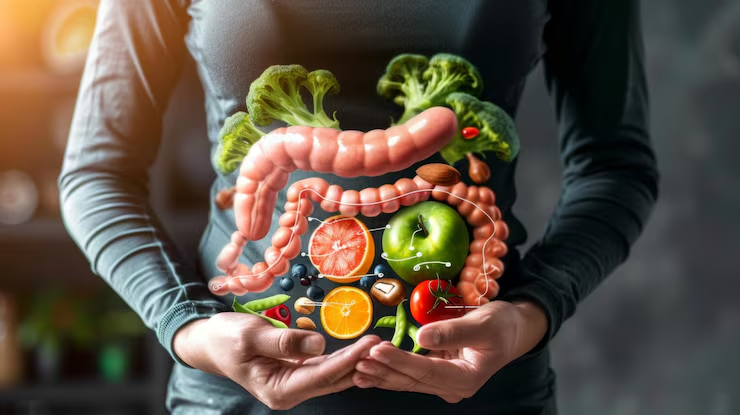
Here is where people get confused. You walk into the store and see twenty different bottles. Which one do you grab?
Rule one: Ignore the fancy marketing.
Flip the bottle over. Look at the back. You want to see specific strain names, not just "probiotic blend."
Rule two: Match the strain to your problem.
For general digestion:
Look for Lactobacillus acidophilus or Bifidobacterium lactis. These are the all-rounders .
For bloating specifially:
The best probiotic for gut health and bloating is often Lactobacillus plantarum 299v. Studies show it significantly reduces abdominal pain and gas .
For constipation:
Try Bifidobacterium lactis HN019. It speeds up transit time so waste doesn't sit around .
For women's health:
The best probiotics for vaginal health are *Lactobacillus rhamnosus GR-1* and *Lactobacillus reuteri RC-14*. These two strains travel from your gut to your vaginal tract and set up camp there .
Rule three: Check the CFU count.
CFU means Colony Forming Units. For daily health, 10 billion to 20 billion is plenty. For serious issues, you might go up to 50 billion. More is not always better. Your gut can only host so many.
How Long Until You Feel Different?
I wish I could tell you it happens overnight. It does not.
- Week one: You might feel worse. This is called die-off. Bad bacteria die and release toxins. It passes.
- Week three: Most people notice their first real improvement. Digestion feels easier .
- Week eight: If the strain is right for you, you should see consistent benefits by now .
- Month three: If nothing has changed, switch strains. You picked the wrong one.
Food vs. Pills: Which Is Better?
This question comes up constantly. Here is the honest answer.
Food is gentler. Yogurt, kefir, kimchi, sauerkraut, and kombucha give you probiotics plus fiber and vitamins. They are great for maintenance.
Pills are stronger. Supplements deliver a higher dose of a specific strain. They are better for fixing a specific problem.
My approach? I eat fermented foods a few times a week. When I finish antibiotics or feel off, I take a supplement for a month.
Common Mistakes That Waste Your Money
I made these mistakes so you do not have to.
Buying the wrong strain.
Taking a constipation probiotic for bloating is like using a hammer on a screw. Wrong tool for the job.
Storing them wrong.
Leaving probiotics in a hot car kills them. Some need refrigeration. Read the bottle.
Taking them with coffee.
Hot liquid kills live bacteria. Take them with cool water.
Quitting too soon.
If you stop after five days because you feel nothing, you never gave them a chance. Commit to one month.
FAQs
Q: Can I take probiotics and antibiotics together?
A: Yes, but space them out. Take the antibiotic, wait two to three hours, then take the probiotic. This keeps the antibiotic from killing the fresh probiotics .
Q: What happens when you start taking probiotics?
A: Some people get gas or bloating for the first few days. This is normal. It means the bad bacteria are dying off. It goes away.
Q: Is it OK to take probiotics every day?
A: Yes. Your body does not build tolerance to them. They leave your system within one to two weeks if you stop taking them, so daily use keeps the good guys in charge .
Q: Do I need to refrigerate my probiotics?
A: Check the label. Some need cold storage. Some are freeze-dried and shelf-stable. If it says "store in a cool, dry place," the cupboard is fine.
Q: Can probiotics help with vaginal yeast infections?
A: They help prevent them. The strains Lactobacillus rhamnosus and Lactobacillus reuteri are your best bet. If you already have an active infection, see a doctor first .
My Final Thought
Your gut is not complicated. It responds to what you put in it. Feed it good bacteria, and it rewards you with energy, clear skin, and regular digestion. Feed it junk, and it lets you know. Probiotics are one piece of the puzzle. They work best when you also eat fiber, drink water, and manage stress. But they are a powerful piece. Start with a quality supplement or a serving of kefir. Give it a month. Pay attention to how you feel. Your body will tell you if it is working.
Here is to a happier gut and a healthier you.