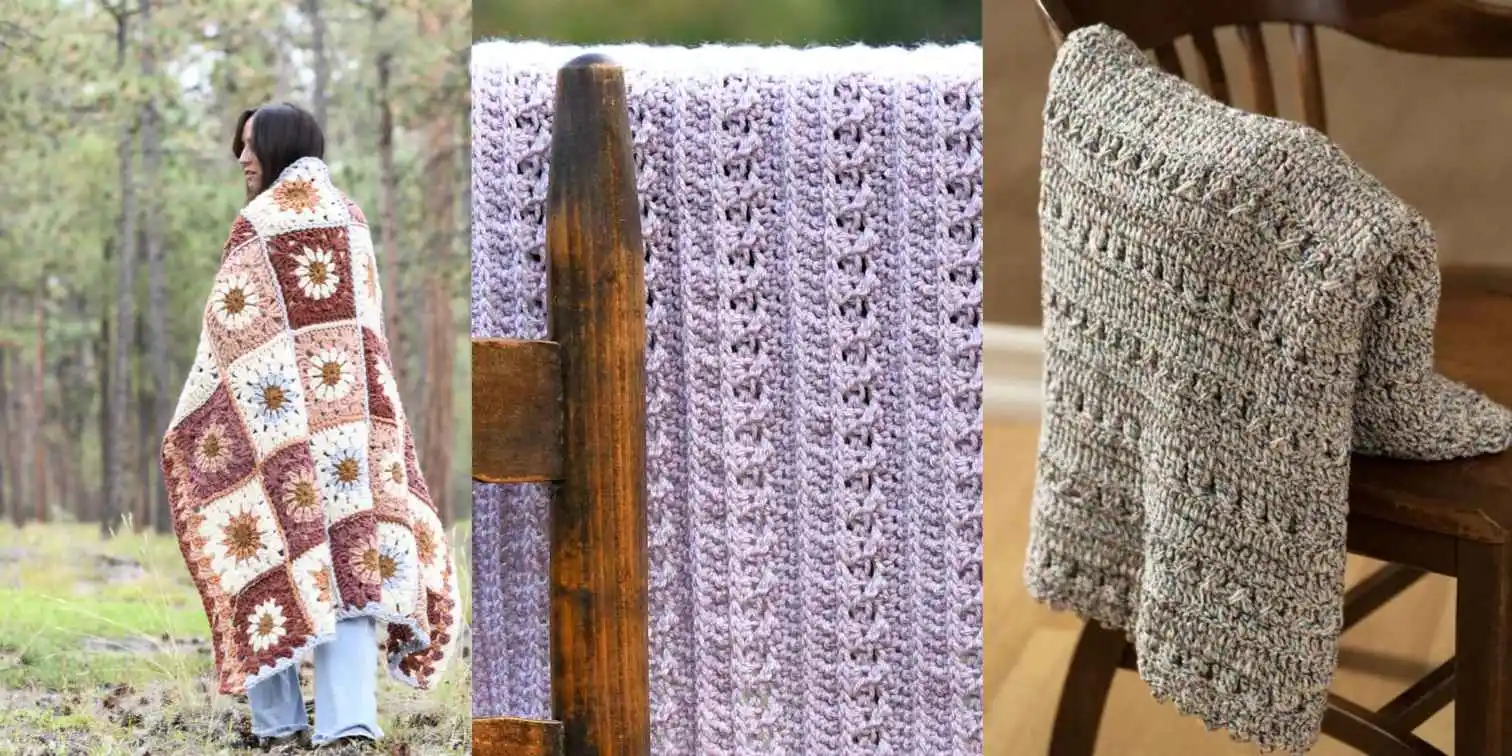
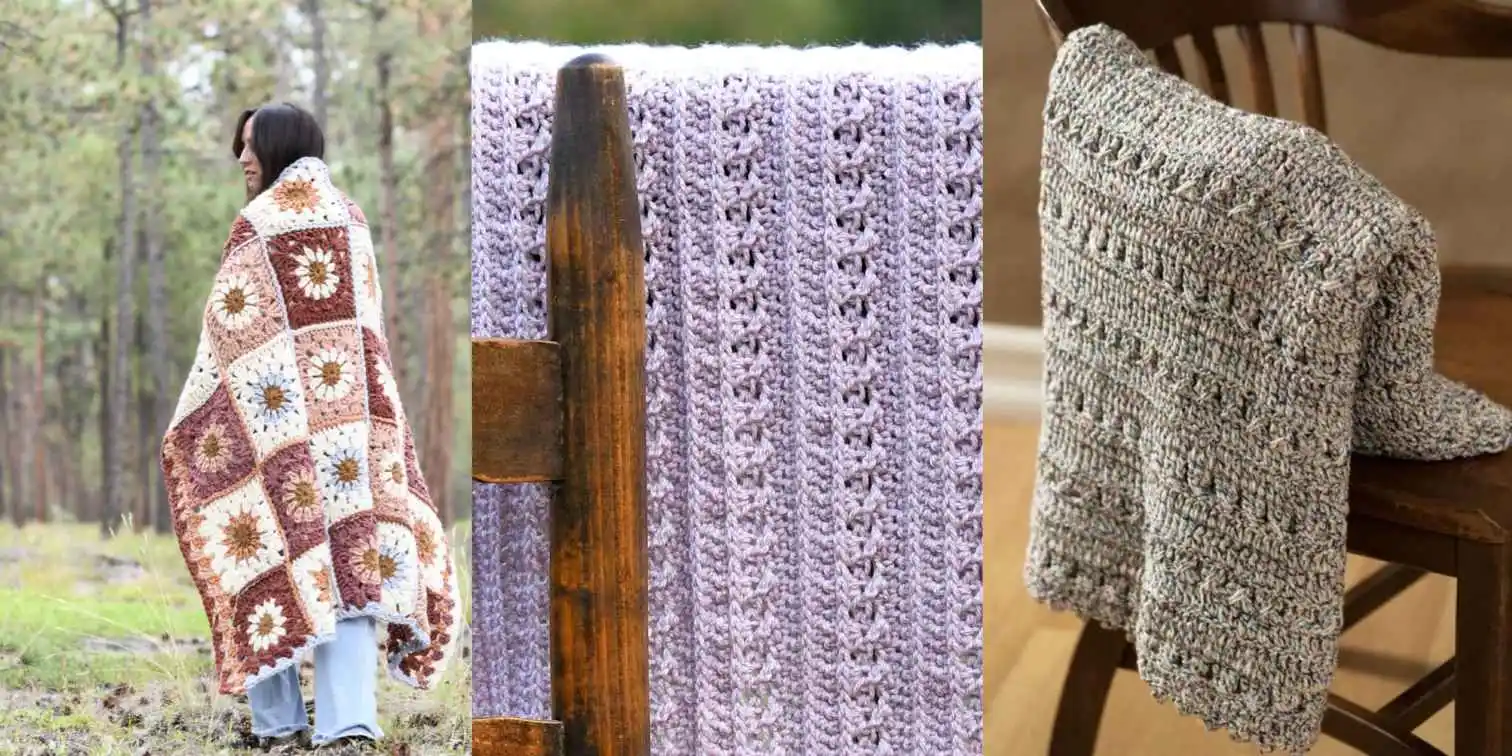
I remember my first blanket. It was ugly. Real ugly. The edges were wavy. The stitches were all over the place. Some were tight. Some were loose. It looked like a drunk person made it. But you know what? I loved it. I still have it. It lives on my couch. My dog sleeps on it now. But I made it. With my own two hands. And that felt good.
You want to make a blanket too. I get it. Everyone wants to make a blanket when they start crocheting. It is the dream. The big project. The thing you show off to your friends. But here is the deal. Most people start a blanket and give up. They get confused. They get bored. They get frustrated. The yarn goes in a bag. The bag goes in a closet. And that is the end of that.
I do not want that to happen to you. That is why I am writing this. I want you to succeed. I want you to finish your blanket. I want you to feel proud.
So let us talk about how to do this. No fancy talk. No confusing words. Just straight talk from someone who has been there.
What Makes a Pattern Easy?
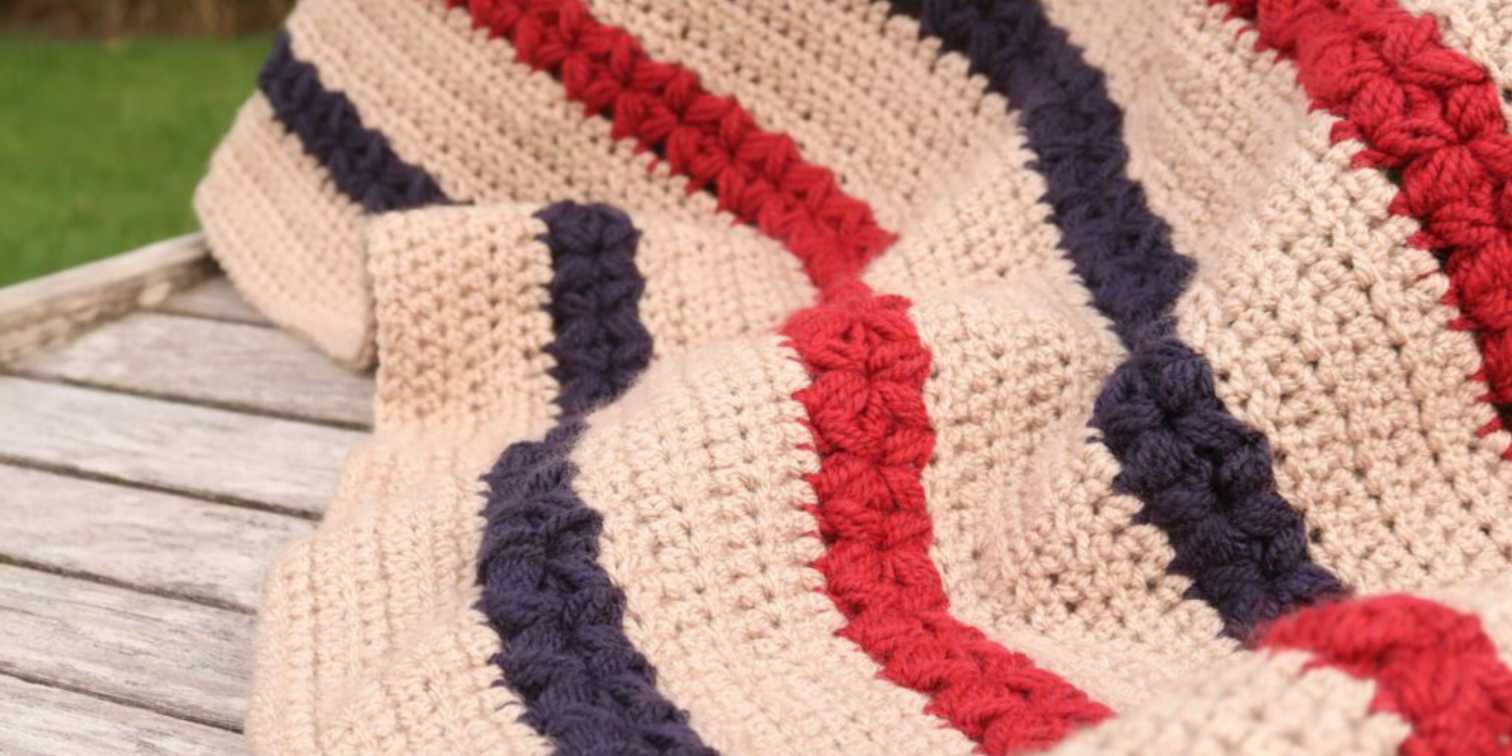
Patterns lie. They really do. They say easy. But then you look at it and there are fifty abbreviations. There are stitches you have never heard of. There are instructions that make no sense. That is not easy. That is a trap.
So here is what you actually need to look for.
Read Also: Modern Knitting Patterns For Women
The Stitches Should Be Simple
You know what simple means? It means single crochet. Half double crochet. Double crochet. That is it. Those three. If a pattern uses those, you are good. If it uses something else, walk away. Save it for later. You are not ready yet. And that is fine.
I made my first blanket with single crochet. Just single crochet. Nothing else. It took forever. But I learned so much. My hands got used to the motion. I stopped looking at my work. I could watch TV and crochet at the same time. That is the goal. You want to get to that easy crochet blanket patterns for beginners.
The Rows Should Repeat
Here is a secret. The best patterns are boring. They do the same thing over and over. Row one is the same as row two. Row three is the same as row four. You do not have to think. You just do.
This matters more than you think. When you repeat the same row, you memorize it. You stop needing the pattern. You stop looking at the page. Your hands just know what to do. It becomes automatic. And when it becomes automatic, you can relax. You can enjoy yourself.
You Should Not Count Much
I hate counting. I really do. It takes me out of the zone. I lose track. I forget where I am. Then I have to start over. It is annoying.
The best patterns do not need much counting. You count your starting chain. That is it. After that, you just go. You might count once in a while to check your work. But you do not count every single row. That is too much work.
No Shaping
Shaping means making the blanket wider or narrower in different places. Some patterns do this on purpose. They make it wider at the bottom. Or they make it narrower at the top. Or they add points at the corners. These blankets look cool. But they are hard.
For your first blanket, stick with a rectangle. Start at one end. Crochet straight across. Turn. Crochet straight back. Keep doing this until it is long enough. That is it. No curves. No points. Just a straight rectangle.
Picking Your Yarn
Yarn is not all the same. I learned this the hard way. I bought this beautiful dark blue yarn. It was so pretty. I could not wait to use it. Then I started crocheting and I could not see anything. The stitches disappeared. I kept missing loops. It was a disaster.
Do not make my mistake.
Get the Right Thickness
Yarn comes in different thicknesses. They call it weight. For your first blanket, get worsted weight. It is also called number four. It is medium. Not too thin. Not too thick.
Why worsted? Because it is everywhere. Every craft store has it. Every color comes in it. It works with a normal hook. You can see your stitches clearly. It is not fiddly. It is not heavy. It is just right.
Do not get thin yarn. Thin yarn takes forever. You will be crocheting for months. You will get bored. You will quit.
Do not get thick yarn either. Thick yarn is heavy. The hook is big. Your hands will get tired. Save that for later.
Pick a Light Color
This is important. Pick a light color. White is good. Cream is good. Light gray is good. Pastel pink is good. Pastel blue is good.
Why light? Because you can see your stitches. You can see where your hook goes. You can see your mistakes. You can fix them.
Dark colors hide everything. Black is the worst. Navy is almost as bad. Deep purple is also bad. They look great in the store. But they are hard to work with. Trust me on this. I learned the hard way.
Avoid yarn that changes color. You know the kind. It has stripes. It has spots. It is pretty but it hides your stitches. The color changes distract your eye. You cannot see what you are doing.
Smooth Is Better
Some yarn is fuzzy. Some yarn has sparkles. Some yarn is bumpy. This yarn is fun. But it is not good for learning. Fuzzy yarn hides your stitches. Sparkly yarn feels scratchy. Bumpy yarn does not slide well.
Get smooth yarn. Acrylic is good. It is cheap. It is soft. It comes in lots of colors. It washes well. It does not split when you crochet.
Picking Your Hook
The hook matters. The wrong hook makes everything harder.
Match the Size
Look at your yarn label. It tells you what hook to use. For worsted yarn, it usually says H or I. These are 5.0 mm and 5.5 mm.
Start with H. It is comfortable. It makes stitches that are not too tight. Not too loose. Your blanket will feel soft.
Pick Aluminum
Hooks come in different materials. Aluminum is the best for beginners. It is smooth. Yarn slides on it. It is cheap. It lasts forever.
Plastic is lighter. But it can bend. It can break. It creates friction. That slows you down.
Wood is pretty. But it can snag. It can be expensive.
Just get aluminum. It works.
Think About Comfort
Hold the hook before you buy it. Does it feel good? Is it too thin? Is it too thick?
Some hooks have rubber handles. These are ergonomic hooks. They are easier on your hands. They prevent cramping. If you are making a big blanket, this matters. A blanket takes many hours. You want to be comfortable.
Patterns That Work
Now let us talk about actual patterns. These are the ones I recommend. I have used them. They work.
The Single Crochet Blanket
This is as simple as it gets. You only need one stitch. The single crochet.
You make a chain. Then you single crochet in every chain. When you get to the end, you chain one and turn. Then you single crochet back across. You keep doing this.
The downside? It is slow. Single crochet is short. It takes many rows to make a big blanket. But it is perfect for learning. You practice the same stitch over and over. Your hands learn. By the end, you are a better crocheter.
The blanket is thick. It has no holes. It is warm. Great for a baby blanket. Great for a throw.
The Half Double Crochet Blanket
This stitch is taller. It works up faster. It is still easy.
You yarn over. Put your hook in the stitch. Yarn over and pull through. Yarn over and pull through all three loops. That is it.
The blanket is softer than single crochet. It has a nice drape. It feels good.
The Double Crochet Blanket
This one is even taller. Works up even faster.
Yarn over. Put your hook in. Yarn over and pull through. Yarn over and pull through two loops. Yarn over and pull through the last two loops.
This blanket has small gaps. It is breathable. Good for summer. The gaps also help you see your stitches. That is helpful.
The Ripple Blanket
This is the wave blanket. It has peaks and valleys. It looks like mountains. It is very pretty.
The pattern uses increases and decreases. That makes the waves. It is not hard. You just follow the repeat. Once you get it, you can go without looking.
This blanket looks great with stripes. You change colors every few rows. The waves make it interesting.
The Granny Square Blanket
This is different. You make small squares. Then you sew them together.
Each square is small. You finish one quickly. That feels good. You get that sense of accomplishment over and over.
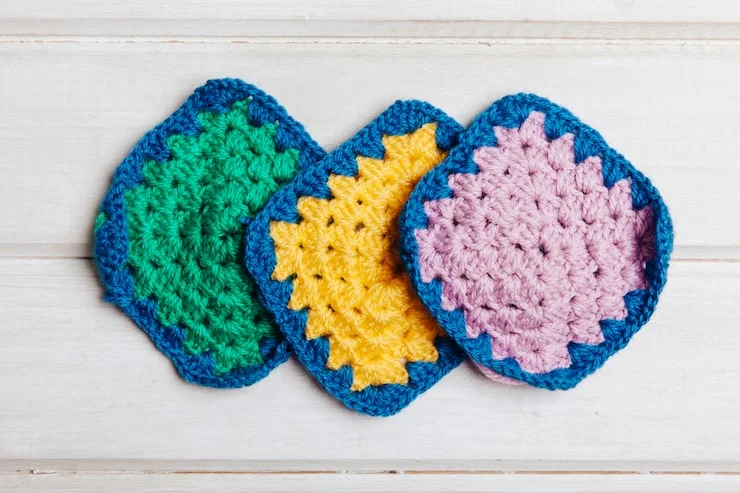
The granny square uses clusters of double crochet. You work in rounds. This is a different way of crocheting. It is worth learning.
The downside? You have to sew the squares together. That takes time. You also have to weave in lots of ends. But the result is beautiful.
Before You Start
Okay. You have your pattern. You have your yarn. You have your hook. Now what?
Make a Test Swatch
Do not skip this. I know you want to start your blanket. But make a test swatch first.
Chain about twenty stitches. Crochet about ten rows. Then stop and look at it.
Is it too tight? Then use a bigger hook.
Is it too loose? Use a smaller hook.
This takes ten minutes. It saves you hours of frustration.
Make a Long Chain
Your starting chain sets the width. Count carefully. It is easy to mess up.
Use stitch markers. Put one every twenty chains. Then count to twenty again. Put another one. This way you do not lose your place.
Make the chain loose. Do not pull tight. Tight chains make the edge curl.
Do the First Row
The first row is the hardest. You are working into the chain. The chain is small. It is hard to find the right loop.
Take your time. Do not rush. If you miss a stitch, go back. Fix it. This first row sets up everything.
Keep Going
After the first row, it gets easier. Your hands start to learn. You find a rhythm. You stop thinking and easy crochet blanket patterns for beginners.
Do not worry about mistakes. Everyone makes them. If you miss a stitch, it is not a big deal. Your blanket will still look good.
You May Also Like: Mastering the Art of Colorwork Knitting Patterns: A Comprehensive Guide
Tips I Wish Someone Told Me
Here are things I learned the hard way. Maybe they will help you.
Take Breaks
I crocheted for four hours once. My hands hurt. My neck hurt. My back hurt. I could not move the next day.
Take breaks. Every hour, stand up. Stretch your fingers. Look away from your work. Your body will thank you.
Check Your Work
Every few rows, lay your blanket flat. Look at the edges. Are they straight? If they are getting wider, you are adding stitches. If they are getting narrower, you are losing stitches.
Fix it early. It is easier to fix a small problem.
Use Stitch Markers
Stitch markers are little rings. They clip onto your work. Put one at the beginning of each row. Put one at the end. This helps you see where your rows start and stop.
Weave In Ends As You Go
When you start a new ball of yarn, weave in the loose end right away. Do not wait. If you wait, you will have many ends. It will be boring. You will want to skip it. Do it as you go.
Block Your Blanket
Blocking means wetting your blanket and laying it flat to dry. You stretch it into shape. It smooths out uneven stitches. It makes the edges straight.
Just wet it. Squeeze out the water. Lay it on a towel. Pull it into shape. Let it dry. It makes a big difference.
Mistakes and Fixes
Everyone makes mistakes. Here are the most common ones.
My Blanket Is Getting Wider
You are adding stitches at the end of rows. This happens when you crochet into the turning chain. The turning chain counts as a stitch. If you crochet into it, you add an extra stitch.
Fix it by skipping the turning chain. Start your row in the next stitch.
My Blanket Is Getting Narrower
You are missing stitches at the end of rows. The last stitch is easy to miss. It sits right next to the turning chain.
Count your stitches. Make sure you work into the last stitch.
My Edges Are Curling
Your starting chain is too tight. The chain pulls the fabric inward.
Make a looser chain next time. Use a bigger hook for the chain. Then switch to your regular hook for the rest.
My Stitches Are Uneven
Your tension is changing. Some rows are tight. Some are loose. This is normal when you are learning.
Relax. Do not hold the yarn too tight. Let it flow. Practice will make it better.
What Size Blanket to Make?
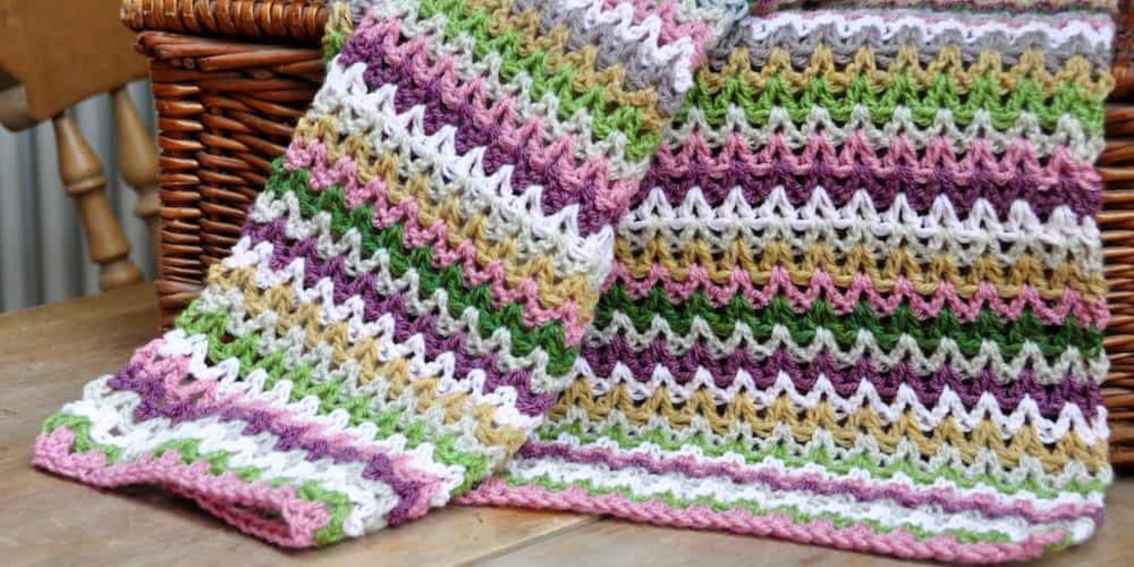
Your first blanket does not have to be big. It should not be big.
Baby Blanket
About thirty inches by thirty inches. This is a good size. It is useful. It is fast. It makes a great gift.
Lap Blanket
About forty inches by fifty inches. Covers your legs. Good if you want something for yourself.
Throw Blanket
About fifty inches by sixty inches. Covers one person. This is bigger. You might want to try a smaller size first.
Bed Blanket
This is huge. Sixty inches by eighty inches or more. This takes forever. Do not start with this. You will get bored.
Adding Some Fun
Once you make one simple blanket, you can try new things.
Change Colors
Changing colors is easy. You finish one color. You start the next at the start of a row. It makes your blanket more interesting.
You can change every row. You can change every few rows. You can change randomly. It is up to you.
Add a Border
A border is an edging around your blanket. It covers the raw edges. It makes your blanket look finished.
You single crochet around the edge. Then you do another round. It is easy.
Try Different Yarn
Once you are comfortable, try different yarns. Chenille is soft and fuzzy. Cotton is smooth and cool. See what you like.
Staying Motivated
Making a blanket takes time. Here is how to keep going.
Set Small Goals
Do not think about the whole blanket. Think about today. Today you will do ten rows. That is manageable. When you finish, you feel good. You want to do more.
Crochet With Others
Crocheting with friends is fun. You can talk while you work. Many craft stores have crochet groups.
Listen to Something
Crochet is good with background noise. Listen to a podcast. Listen to a book. Listen to music.
Celebrate Progress
Every time you finish a section, celebrate. Take a picture. Show someone. You are making something. That is worth celebrating.
Finishing Up
You finished your blanket. Now what?
Block It
Block it. It makes a difference.
Take Pictures
Take pictures. Share them. You worked hard. Show it off.
Give It Away
Give it to someone you love. A baby blanket for a new parent. A throw for a friend. Giving your work away feels good.
Start Another One
Once you finish one, you will want to make another. That is how it works. You will get better. You will try new patterns. Your skills will grow.
FAQs
How long does a blanket take?
Depends on the size. A baby blanket might take twenty hours. A throw might take forty. A bed blanket might take eighty. Work at your own pace.
How much yarn do I need?
A baby blanket needs about one thousand yards. A throw needs about two thousand. A bed blanket needs about four thousand. Check your pattern.
What if I make a mistake?
If it is small and hard to see, leave it. If it changes the size, fix it. You can always rip out your work and start again.
What is the best stitch?
Single crochet. It is the simplest. It gives you practice. It makes a warm blanket.
Can I make a blanket without a pattern?
Yes. Once you know the stitches, you can do it. You decide the width. You decide the length. You decide the stitch. You are in charge.
Conclusion
Your first blanket will not be perfect. That is okay. It will be yours. It will be beautiful in its own way. Every stitch is a step forward. Every mistake is a lesson. Do not compare yourself to others. Do not worry about speed. Do not stress about mistakes. Just keep your hook moving. Trust the process.